


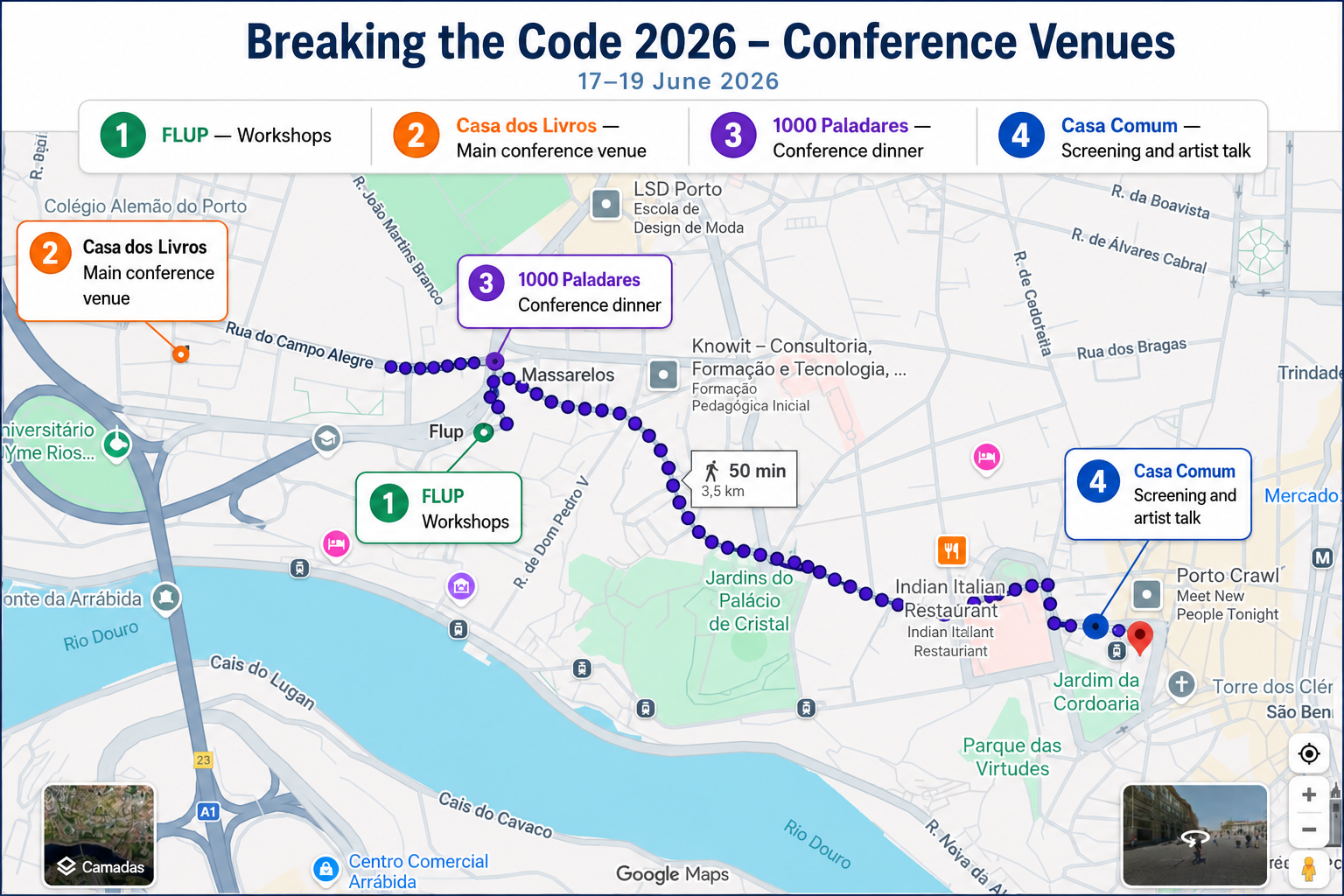
Venues and Dates
KEYNOTE SPEAKERS
Esther Monzó-Nebot (Universitat Jaume I)

Dr. Esther Monzó-Nebot trains future translators and interpreters and translation and interpreting researchers at Universitat Jaume I. She is the leader of the TRAP (Translation and Postmonolingualism) research group, Editor-in-Chief of Just. Journal of Language Rights & Minorities, and Graduate Program Coordinator of Researching Translation and Interpreting. Her research focuses on the sociology of translation and interpreting, particularly legal translation and interpreting, language rights, multilingual governance, and the relationship between language, institutions, and social justice. She previously held a professorship at University of Graz, where she trained researchers in the sociology of translation and interpreting. Her current work addresses inclusive language, translation and oppression, translation policy, and the social, political, and ethical dimensions of translation technologies, including artificial intelligence. She has published widely and participates in international research collaborations on multilingualism, institutions, and power.
Hacktivating Translation and Interpreting: Lucidity in Technofeudal Culture Wars
Social discourses present machine translation and automated interpreting (MTI) as neutral technical solutions to communicative barriers, framing multilingualism as a problem, a technical problem. However, neutrality is a point of view, in this case, of those concentrating the resources required for developing MTI systems, including the large language models enabling prompt-based translation. The result is not only a redistribution of work but also a redefinition of translation and interpreting themselves, turning them from interpretive and ethical practices into standardized services that fit the needs of the few. This keynote approaches hacktivating translation and interpreting as a set of actual and potential interventions that redirect these practices toward plural and inclusive forms of mediation. It draws on the idea of lucidity—the effort to face the conditions in which we act without illusion—to examine how exposing the social and ideological work done by apparently neutral technologies can make collective resistance possible. Lucidity implies the ability to see through narratives such as those that present extractive uses of translation as progress. Exposing some of the coalescing narratives, the talk argues for strategies that resist fragmentation, reclaim ethical attention, and re-assert the cultural and political value of translation and interpreting. It suggests that such strategies are essential to counter the concentration of power typical of technofeudal orders, linking the future of democratic societies to the future of translation and interpreting.
Tatiana Bazzichelli (Disruption Network Lab, Berlin)

Tatiana Bazzichelli is the founder and director of the Disruption Network Lab, a non-profit organisation in Berlin that explores the intersection of politics, technology and society (https://www.disruptionlab.org/). Her work focuses on whistleblowing, network culture, art and activism. Since September 2023, she is the director of the Disruption Network Institute, a new centre for investigation and empirical research into the impact of artificial intelligence on new technologies of war, automated weapons and networked warfare (https://disruption.institute). She received a Ph.D. in Information and Media Studies from the Faculty of Arts, Aarhus University, in 2011 and is the author of Whistleblowing for Change (2021), Networked Disruption (2013), Disrupting Business (2013) and Networking (2006). For three years until 2014, she was a curator at the transmediale art & digital culture festival in Berlin, where she developed the year-round programme “reSource transmedial culture Berlin” and curated several events.
Distributed Resistance: Art, Activism and Whistleblowing After the Digital Utopia
In the 1990s-2000s, many of us were fighting for freedom of expression, digital rights and the sharing of artistic and hacktivist practices online, as well as imagining a better world. We forged a playful and utopian path of participation in both the digital and ‘real’ worlds. The belief in the internet as a means of openness and political activism was combined with the spirit of hacker culture: ‘information wants to be free’. At the same time, a scenario of increasing surveillance and control was taking shape, inviting the public to react, exposing systems of power and injustice, and helping to develop new paths of collective and self-determination. What remains of that spirit today? Widespread populism has led to the consolidation of the right-wing, social networking has turned into a commercial product, and new technologies of domination have clouded our utopias. But new acts of grassroots resistance and distributed, widespread technological sharing practices seek to redefine the balance of power. On the international context, acts of whistleblowing to expose technological and military systems of domination – from Chelsea Manning to Edward Snowden – helped to rethink the nature of resistance. Over the past four years, there has been a relentless succession of wars, from Ukraine to Gaza and now in Iran and Lebanon. In the spirit that has united online and offline grassroots resistance for so many years, Tatiana Bazzichelli aims to reflect on new practices to adopt to continue our resistance through art, activism and ‘real-world practices’ such as whistleblowing. How can we deconstruct forms of power to find new spaces for freedom and action?
Miguel Carvalhais (FBAUP)

Professor of Design and Dean of the Faculty of Fine Arts at the University of Porto, Carvalhais works at the intersection of computation, sound, and artistic practice. His research and artistic work approach computation as a cultural and aesthetic condition, shaping how form, process, and perception emerge in contemporary art.
Searching the Unpredictable, Coding the Break: Art, Computation, the Rift
Computation brings to art something fundamentally different from most of its previous tools and media, something that allows artists to create contexts for unique aesthetic experiences. In this talk I will explore computational artworks, drawing from the first-hand experience of working with computation as a material, a tool, and a medium. I will reflect on key aspects of computational aesthetics — how computation is spectral, situated, performative, improvisational, theatrical, subjective, and futural — and expand on some of the prime tensions that are catalysed by computation and on their implications to the creation and the experience of art.
Mark Amerika (University of Boulder, Colorado)

Mark Amerika has exhibited his art in many venues including the Whitney Biennial, the Denver Art Museum, the Institute of Contemporary Arts in London, ZKM, the Walker Art Center, the Marlborough Gallery in Barcelona, and Casa Comum at the University of Porto.
In 2009-2010, The National Museum of Contemporary Art in Athens, Greece, featured Amerika’s comprehensive retrospective exhibition entitled UNREALTIME including his groundbreaking works of Internet art GRAMMATRON and FILMTEXT as well as his feature-length work of mobile cinema, Immobilité. In 2012, Amerika released his transmedia narrative, Museum of Glitch Aesthetics (MOGA), a multi-platform net artwork commissioned by Abandon Normal Devices in conjunction with the London 2012 Olympic and Paralympic Games. The MOGA project has since been remixed for Amerika’s solo exhibition “Glitch. Click. Thunk” at the University of Hawaii Art Galleries and “Glitch Mix: not an error,” which took place in Havana, Cuba, at the Estudio Figueroa-Vives and the Norwegian Embassy to Cuba.
About Dream Factory
Dream Factory is Mark Amerika’s newest artwork, made in collaboration with Will Luers and Chad Mossholder. In this 30-minute AI-driven cinema work, the artists use poetic and theoretical language in real-time call-and-response sessions with AI systems to coax artificial figures into being. Unfolding across five movements, the work traces these figures as they evolve from ghostly apparitions into entities that speak directly to viewers in modulated human voices, raising urgent questions about creativity and human expression in the age of machine intelligence.
Accommodation suggestions
Tuela Porto Hotel (3-star, 50 rooms) – 5 minutes
Rua Arq. Marques Da Silva, 200 – 4150-483 Porto – Portugal
Phone: (+351) 22 6194100 – Landline: (+351) 22 6194160
Email: porto@hoteisfenix.com
Boavista Guest House (3-star) – 10 minutes
Rua da Boavista, 667 – 4050-110 Porto – Portugal
Phone: (+351) 92 40 41 500 – Landline: (+351) 22 202 60 86
Email: info@boavistaguesthouse.com
Hotel Vice-Rei (2-star) – 5 minutes
Rua de Júlio Dinis, 779 – 4050-326 Porto – Portugal
Phone: (+351) 22 543 0120
Email: geral@hotelvicerei.com
HF Fénix Porto Hotel (4-star, 100 rooms) – 5 minutes
Rua Gonçalo Sampaio, 282 – 4150-365 Porto – Portugal
Phone: (+351) 22 6194100 – Fax: (+351) 22 6194160
Email: porto@hoteisfenix.com
HF Ipanema Porto Hotel (4-star, 100 rooms) – 5 minutes
Rua do Campo Alegre, 156/172 – 4150-169 Porto – Portugal
Phone: (+351) 22 6194100 – Fax: (+351) 22 6194160
Email: porto@hoteisfenix.com
HF Ipanema Park Hotel (5-star, 50 rooms) – 20 minutes
Rua de Serralves, 124 – 4150-702 Porto – Portugal
Phone: (+351) 22 6194100 – Fax: (+351) 22 6194160
Email: porto@hoteisfenix.com
Other hotels near the Faculty
Hotel Douro (3-star)
Rua da Meditação, 71 – 4150-487 Porto – Portugal
Phone: (+351) 226 001 122 – Fax: (+351) 226 001 090
Quality Hotel Portus Cale Porto (3-star)
Avenida da Boavista, 1060 – 4100-113 Porto – Portugal
Phone: (+351) 226 083 900 – Fax: (+351) 226 083 906
Porto Palácio Hotel (5-star)
Av. da Boavista, 1269 – 4100-130 Porto – Portugal
Phone: (+351) 226 086 600 – Fax: (+351) 226 091 467
Email: reservaspph@sonae.pt | portopalaciohotel@sonae.pt
Website: www.hotelportopalacio.com
Sheraton Porto Hotel & Spa (5-star)
Rua Tenente Valadim, 146 – 4100-476 Porto – Portugal
Phone: (+351) 220 404 000
Email: sheraton.porto@sheraton.com
Website: www.sheratonporto.com
CALL FOR PAPERS
Breaking the Code: Hacktivating Non-Normative Algorithms
International Conference – 18–19 June 2026
Theme 2026: Error 403 – Critical Refusals
Casa dos Livros (University of Porto) + online
An output of the BRKCODE Project (DARIAH-EU), in partnership with the Electronic Literature Organization
What does it mean to err – to glitch, to refuse efficiency, to disobey system logics?
The inaugural conference of Breaking the Code: Hacktivating Non-Normative Algorithms adopts the theme Error 403 – Critical Refusals, inviting scholars, artists, and those working across research and artistic practice to treat error as a critical condition, to read glitch as resistant gesture, and to approach refusal and deviation as an opening to new epistemologies and creative forms.
We proceed from the recognition that algorithms, often presented as neutral and universal, operate as normative structures that shape and constrain identities. They codify and reproduce biases linked to gender, race, class, and sexuality while masking these operations through appeals to efficiency and objectivity. To address these dynamics, we draw on Judith Butler’s performativity, Kimberlé Crenshaw’s intersectionality, and Donna Haraway’s situated knowledges, in dialogue with Critical Code Studies (Marino, 2020; Montfort et al. 2013) and Creative Digital Humanities (Rettberg and Saum-Pascual 2020).
Within this frame, error becomes method. Glitch practices, acts of critical hacking, and algorithmic disruptions, such as livecoded improvisations, are not accidents to correct but practices that surface and expose what systems obscure. As Legacy Russell notes in the Glitch Feminism Manifesto (2020), “to glitch is to embrace malfunction, and to embrace malfunction is in and of itself an expression that starts with ‘no’.” Crucially, “malfunction” here does not denote total breakdown but deviation from normative scripts: a “nonperformance” and a “refusal” that resists the demand for seamless operability. In that spirit, the conference foregrounds artistic and scholarly interventions that make visible algorithmic exclusions, challenge normative frameworks, and reimagine alternative futures for digital culture.
In doing so, Error 403 – Critical Refusals seeks to establish a critical platform linking intersectional research with creative disobedience, while advancing explorations of algorithmic glitch aesthetics and pedagogies. Through this platform, the conference positions itself at the crossroads of theory and practice, inviting dialogue across critical analysis and experimental making.
Topics of Interest
We welcome contributions that respond to the theme through conceptual analysis, artistic intervention, or pedagogical experimentation. Areas of particular interest include:
- Intersectional perspectives on algorithmic systems: analyses of how identity categories such as gender, race, class, and sexuality are encoded, erased, or reshaped by computational processes.
- Creative disobedience and critical hacking: artistic tactics of refusal and disruption, ranging from glitching and livecoding to performance-based or speculative approaches.
- Glitch aesthetics as critical method: practices that foreground error as a site of resistance, identity work, or ontological dissidence.
- Pedagogies of error: teaching and learning approaches that use mistakes, deviations, and creative misuse as tools for understanding and reconfiguring algorithmic systems.
- Histories and counter-histories: recovering the contributions of women and gender minorities in computing and digital art, while rewriting narratives of technological progress from feminist and queer standpoints.
- Critical Code Studies and beyond: treating code as cultural, ideological, and poetic text, with attention to its exclusions, performativities, and possibilities for reimagining.
- Cyberliterary and cyberartistic interventions: works that unsettle algorithmic normativity through writing, visual culture, performance, or hybrid media practices.
- Care, inclusivity, and infrastructures: rethinking digital systems through the lenses of accessibility, relationality, and techno-feminist futures.
Formats
We invite proposals for:
- Academic papers (20 min presentations)
- Artistic presentations / performances (20 min)
- Work-in-progress discussions (10 min short talks with collective feedback)
- Workshops
Proposals should indicate the chosen format and any technical or spatial requirements.
Submission Guidelines
Abstract: max. 300 words
Short bio: max. 100 words
Indicate format: paper / artistic presentation / performance / work-in-progress / workshop
Language: English
Organizing Committee
Coordinated by Diogo Marques (CODA + ILCML/University of Porto), Ana Cunha (ILCML/University of Porto), Marinela Freitas (ILCML/University of Porto), Tiago Pinho (FBAUP/i2ADS) Rui Torres (ICNOVA, Fernando Pessoa University), Luís Trigo (CODA + CLUP/University of Porto) within the framework of the project Breaking the Code: Algorithmic Non-Normativity in Creative Digital Humanities (BRKCODE, DARIAH ERIC 2024–26).
Scientific Committee
Alex Mitchell (National University of Singapore)
Alex Saum-Pascual (U. Berkeley)
Amira Hanafi (Susquehanna University)
Ana Carvalho (UMAIA; CIAC)
Ana Cunha (ILCML/University of Porto)
Ana Marques da Silva (University of Coimbra, MATLIT LAB)
Anna Nacher (Jagiellonian University)
André Rangel (FBAUP)
Bruno Ministro (Independent Researcher)
Cristina Sá (UCP)
David Ciccoricco (University of Otago)
David Thomas Henry Wright (Nagoya University)
Diego Gimenez (Faculty of Arts and Humanities, University of Macau
Élika Ortega-Guzman (University of Colorado, Boulder)
Esther Monzó-Nebot (Universitat Jaume I)
Inês Cardoso (University of Porto, ILCML)
Joana Chicau (University of the Arts London)
José Ramom Pichel (Universidade de Santiago de Compostela)
Luís Lucas Pereira (University of Coimbra, FCTUC)
Lyle Skains (Bournemouth University)
Manuel Portela (University of Coimbra, MATLIT LAB)
Mark Amerika (University of Colorado, Boulder)
Mark Marino (University of Southern California)
Miguel Carvalhais (University of Porto, i2ADS)
Nuno Miguel Neves (University of Belgrade)
Patrícia Gouveia (ITI/LARSyS)
Pedro Alves da Veiga (CIAC, UaB)
Pedro Cardoso (University of Porto, i2ADS)
Pedro Ferreira (independent artist)
Philipp Teuchmann (ICNOVA)
Rosemary Lee (University of Porto, i2ADS)
Sofia Ponte (IADE, ID+)
Terhi Martilla (ITI/LARSyS)
Thomas Ballhausen (University Mozarteum Salzburg)
Tiago Assis (University of Porto, i2ADS)
Tiago Pinho (FBAUP/i2ADS)
Tina Escaja (The University of Vermont)
Vera Moitinho de Almeida (University of Porto, CODA)
The Microsoft CMT service was used for managing the peer-reviewing process for this conference. This service was provided for free by Microsoft and they bore all expenses, including costs for Azure cloud services as well as for software development and support.
For more info, please contact: dmarques@letras.up.pt
The Breaking the Code Conference are committed to the ELO Code of Conduct, and will conduct all activities in alignment with these values.